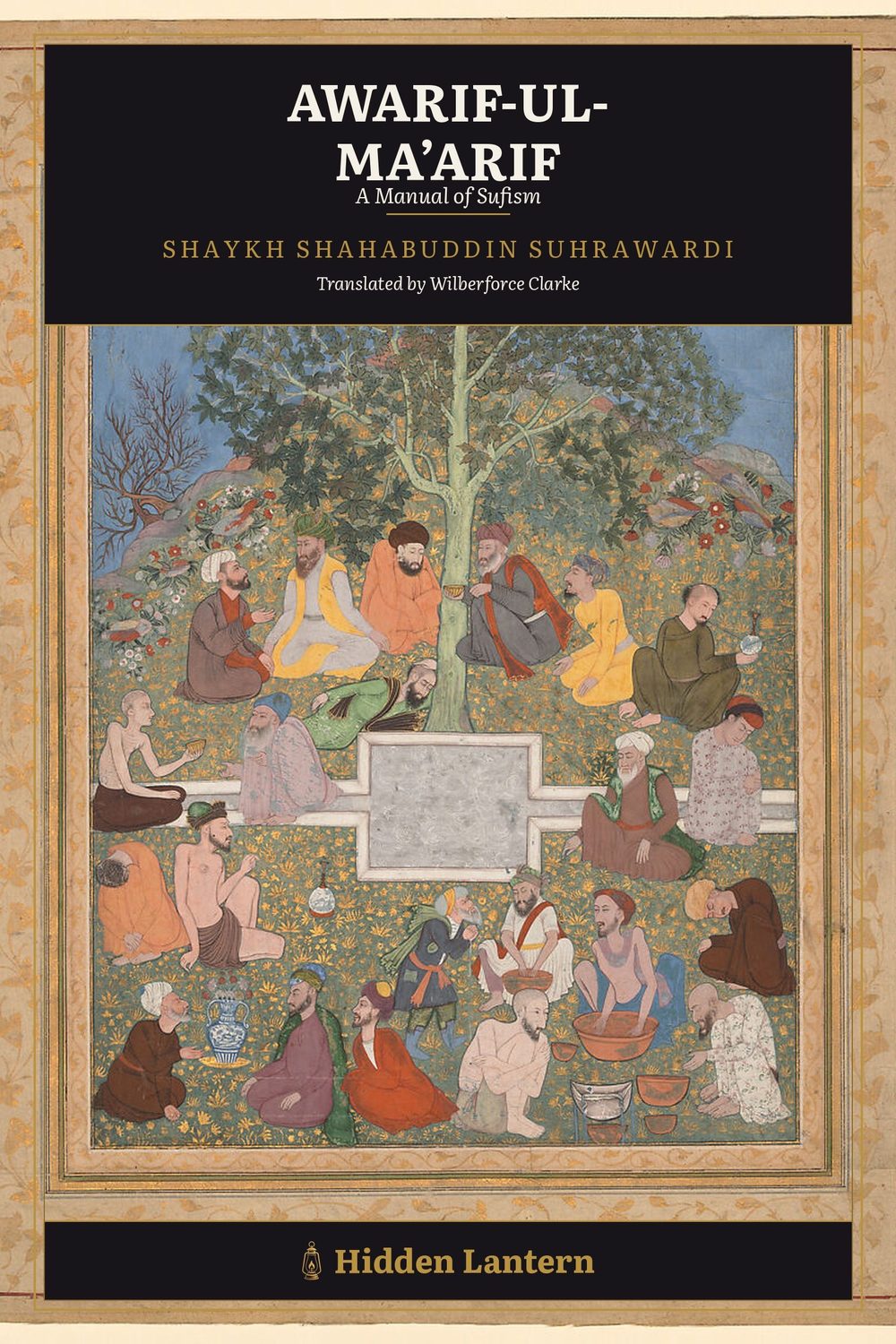
Where much of this catalog is poetry or memoir, Awarif-ul-Ma'arif is closer to a training manual: a systematic account of the stages of spiritual practice, the conduct of the spiritual guide and student, and the etiquette of communal life. It fills a different niche in the catalog, practice-oriented rather than devotional or poetic.
The complete text is free to read online. Print and ebook editions are newly typeset, with corrected text and linked notes.
Hardcover forthcoming
The ebook includes EPUB and PDF for $2.99; you are welcome to add a little more if you wish. The text itself stays free to read online. For Kindle, send the EPUB with Amazon's free Send to Kindle tool.
This edition follows H. Wilberforce Clarke’s 1891 English rendering of the Persian Misbahu-l-Hidayat, based on Suhrawardi’s Arabic Awarif-ul-Ma’arif. The revised print and Kindle editions retain the original preface, authorities, tables, and notes, with transcription errors and omissions corrected.
H. Wilberforce Clarke (1840–1905), a Lieutenant-Colonel in the Royal Engineers, translated several major Persian works while stationed in India, including the Divan of Hafiz.
All 14 sections are free to read online, with no signup.
 Hidden Lantern